The Golden Turning
Mabon: the Autumn Equinox
OR
the Art of Beginning Again
Becca Jean
23 September 2026
Image created by Abdul Qaiyoom on Adobe Stock.
What is Mabon?
As summer exhales its last bit of warmth and September’s amber light stretches across the Northern Hemisphere, the world arrives at a rare cosmic pause. Day and night exist in near perfect balance, the Earth’s tilt aligns in luminous symmetry, and a subtle turning begins. For seasonal practitioners, we call this occasion Mabon OR the second harvest, a celebration of abundance, gratitude, release, and renewal. It’s a scientific event, a cultural crossroads, and for many, a deep invitation to begin again.
Mabon is the modern pagan and Wiccan celebration of the autumn equinox. Occurring between September 21 and 24 in the Northern Hemisphere, it marks a time of gathering, appreciation, and preparation for the darker months ahead. Although the use of the name only first appeared in the 1970s (inspired by the Welsh mythic youth Mabon fab Modron) the practices carry ancient seasonal observances across cultures and continents.
Bavarian Oktoberfest, early American October Thanksgiving, and countless equinox-aligned monuments from Chichen Itzá to Mnajdra all reflect humanity’s long-standing reverence for this turning of the year.
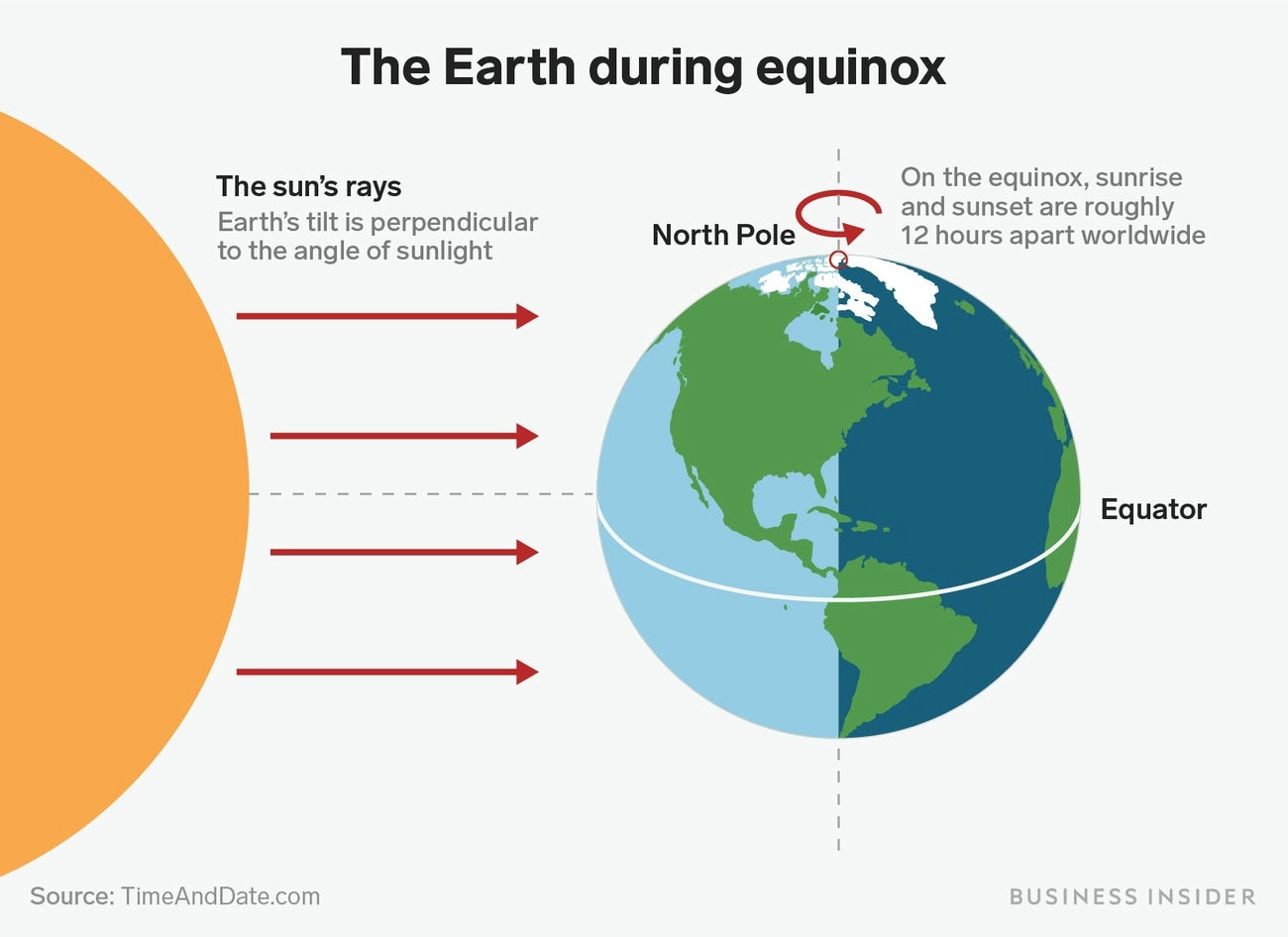
Image by Shayanne Gal on Business Insider.
The Science of the Equinox
Twice a year, Earth reaches a point in its orbit where its 23.5-degree axial tilt leans neither toward nor away from the Sun. At the equinox, sunlight falls evenly across the globe, creating nearly equal day and night. NOAA explains that this balance is not perfectly exact (atmospheric refraction slightly extends daylight), but the symbolism remains powerful: a brief, luminous moment of equilibrium before the Northern Hemisphere begins its slow descent into longer nights, cooler temperatures, and winter’s approach.
Earth’s distance from the sun does not cause this shift; in fact, Earth is closest to the sun in January. Instead, the equinox marks a turning point in the distribution of light. After this moment, the sun’s arc lowers, shadows lengthen, and temperatures begin their gradual decline. The season’s warmth lingers for weeks because of thermal lag, but the path toward winter has begun.
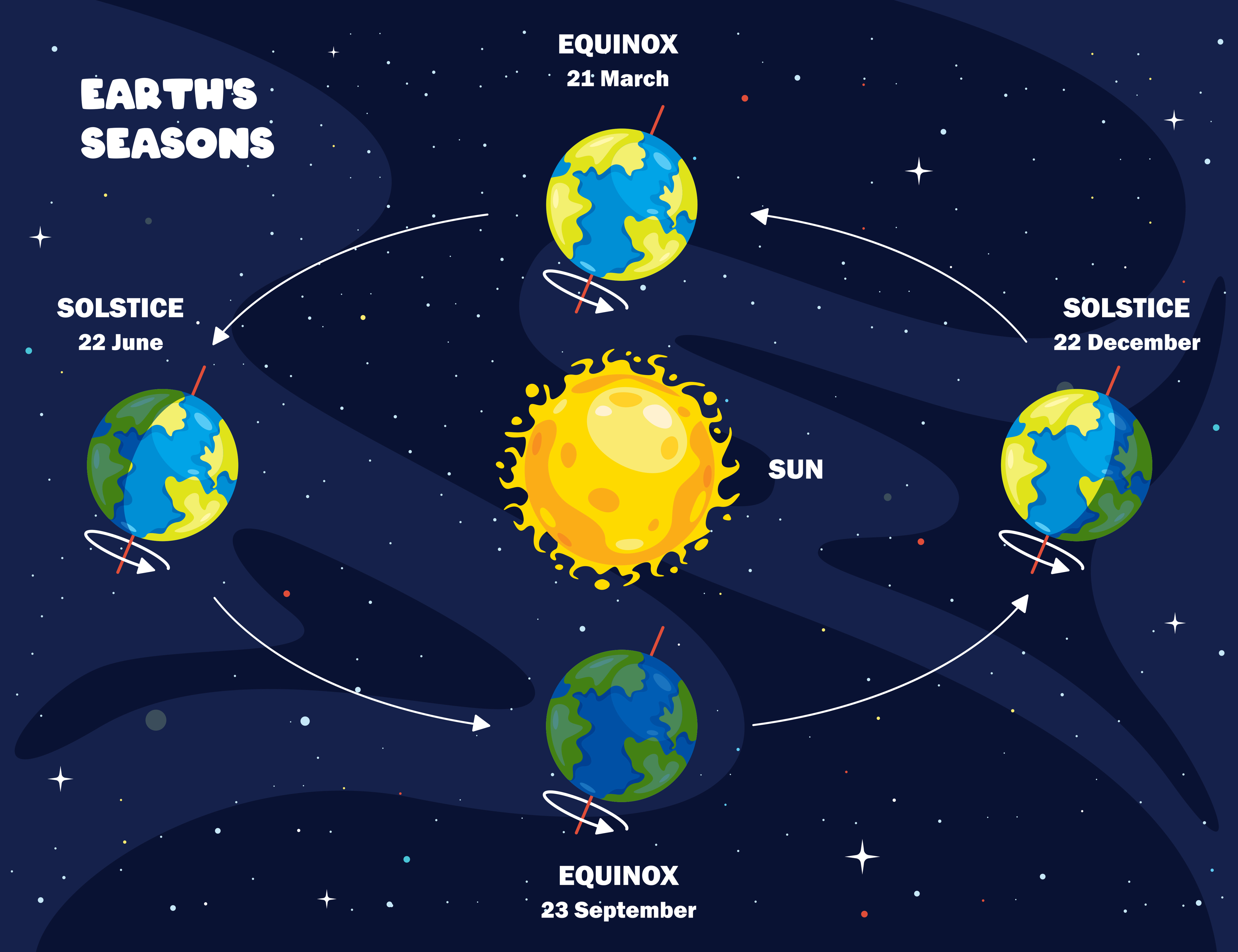
Image created by yusufdemirci on Adobe Stock.
The Second Harvest and the Sacred Pause
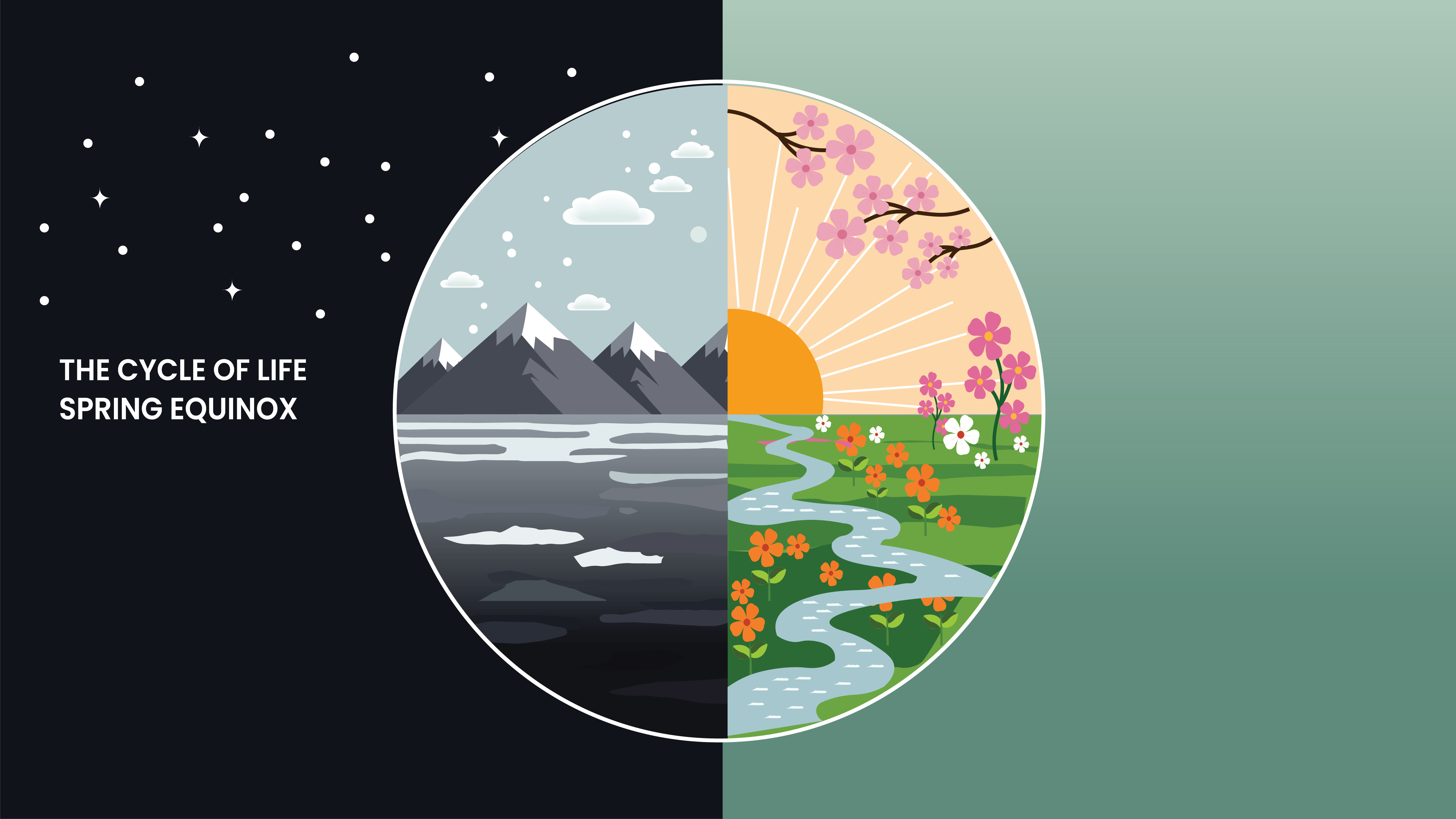
In modern paganism, Mabon is the second harvest, nestled between Lammas and Samhain. It’s a time to gather apples, grains, squash, and late-summer fruits; to preserve, to feast, to walk among turning leaves; and to honor the abundance of the earth before winter’s quiet descent. But Mabon is also a festival of balance, a moment to honor what has ripened (both in the fields and in one’s life) and to prepare for the season ahead; to find their own equilibrium. It’s a time to ask:
What has grown in me this year?
What am I carrying that belongs to the past?
What is ready to be released?
What do I want to begin?
The outward abundance of the harvest mirrors an inward harvest of experience, wisdom, and self-understanding.
Created by Prakash on Adobe Stock.
A Season of Renewal
For many women in midlife, Mabon resonates with startling clarity. The equinox’s golden light, its sense of pause, and its invitation to reassess one’s life mirror the transitions of perimenopause, shifting identities, empty nests, growing careers, and the quiet emergence of a new self.
There is a consensus that sees autumn as decline. But nature tells a different story.
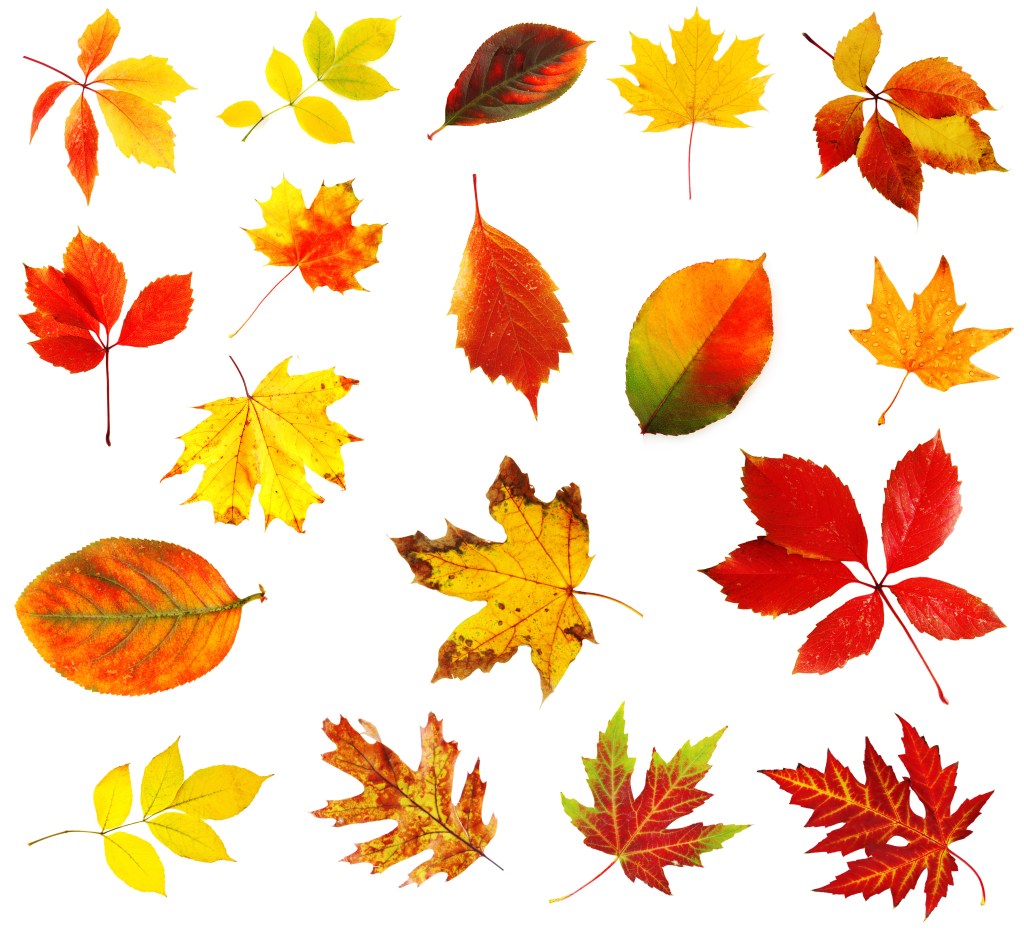
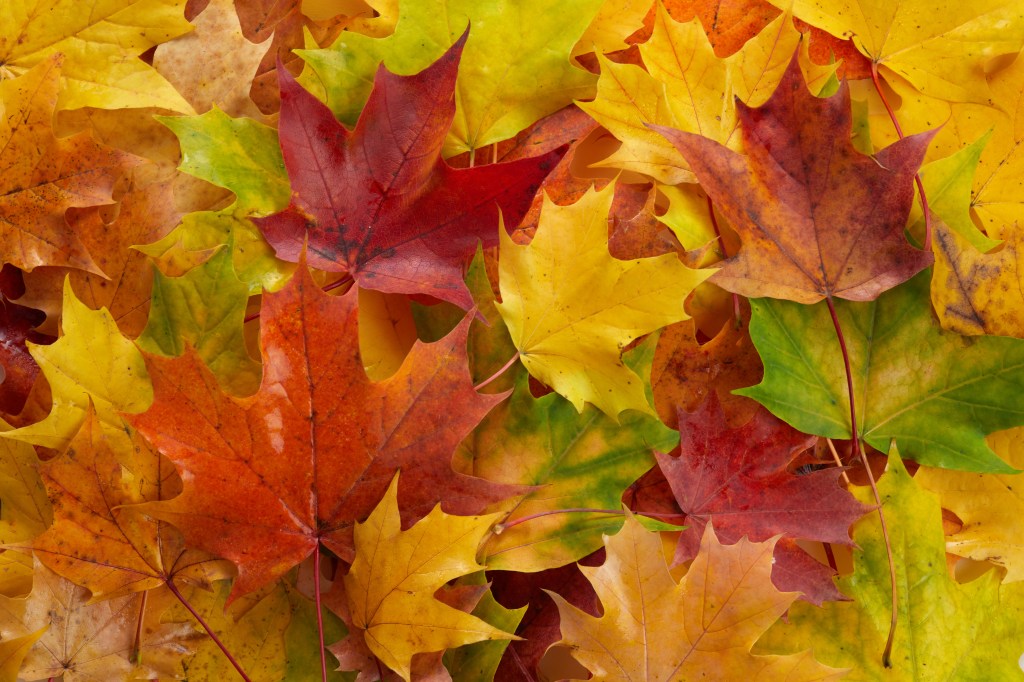
Before the leaves fall, they blaze.
Gold.
Amber.
Crimson.
Copper.
They become their most vivid selves before releasing what no longer serves.
This is the radical invitation of Mabon:
Not to shrink.
Not to mourn what was.
But to blaze fully, unapologetically, and then release from a place of wholeness.
Created by Ophelia on Adobe Stock.
Traditions, Rituals, and Ways to Celebrate
Mabon celebrations blend ancient harvest customs with modern pagan practices. Feasting, nature walks, altar-building, and gratitude rituals are common across traditions. Each practice reflects the dual nature of the equinox: outward abundance and inward reflection.
Balance Altar
Create a visual representation of equilibrium by placing light and dark elements side by side: a white crystal for summer’s fading warmth, a dark crystal for the approaching shadow season. Surround them with pinecones, gourds, rosemary, or autumn leaves.
Apple Magic
Cut an apple horizontally to reveal the hidden five-pointed star within its core, a natural pentacle symbolizing wisdom, protection, and the magic concealed in ordinary things. Offer half to nature as a gesture of reciprocity.
Gratitude & Release Ceremony
Write what you are grateful for on one paper, and what you are ready to release on another. Read the gratitude aloud. Burn the release paper safely outdoors, letting the ashes return to the earth as a sign of transition.
Seasonal Foods
Mabon feasts often include apples, pears, squash, grains, and warming spices. A simmered apple cider becomes both a drink and a ritual, filling the home with autumn’s scent. Baking honey whole wheat bread connects directly to the grain harvest, turning kneading into meditation and nourishment into devotion.
Nature Walks
Walking among turning leaves is one of the simplest and most profound Mabon practices. Moving slowly, noticing color, and letting the season settle into the body becomes a way to ground oneself.
Rest With Intention
As daylight decreases, the body naturally seeks slower rhythms. Choosing rest, quiet evenings, and earlier bedtimes becomes an act of alignment with the season rather than withdrawal.
Created by vetre on Adobe Stock.
Mabon Across Modern Pagan Sources
Across contemporary pagan communities, the depiction of Mabon is a celebration of balance, abundance, gratitude, and release. The Boston Public Library highlights its modern origins and harvest traditions; while the Pagan Grimoire emphasizes mythological messages, seasonal symbols, and practical rituals. Many others frame Mabon as a moment of harmony and relational nourishment. While guides often focus on accessible ways to celebrate: altars, correspondences, and reflective practices.
Turning, Not Ending
As I mentioned earlier, Mabon is often mistakenly understood as a festival of decline. But its deeper message is one of turning. The equinox is a pivot point, a moment suspended between seasons, offering clarity before movement.
Though the name is modern, the themes are timeless: honoring the harvest, acknowledging the turning of the year, and embracing the shift toward introspection.
For practitioners, Mabon becomes a mirror:
You are not diminishing.
You are not fading.
You are turning toward wisdom, toward authenticity, toward the next version of yourself.
Just as the Earth tilts, redistributing light and reshaping the seasons, Mabon invites each person to shift gently toward what is ready to grow next.
The Harvest Within
The gathering of crops represents an allegory for the internal harvest.
Experience: Everything survived, learned, built, lost, and rebuilt.
Wisdom: The clarity that arrives only after decades of living; what matters, what doesn’t, and what you will never tolerate again.
Self: The sacred recognition of one’s own worth, often reclaimed after years of self-neglect.
Mabon asks us to honor these harvests with the same reverence we give our physical crops.
Created by Graficriver on Adobe Stock.
References
Business Insider: The fall equinox is on Wednesday. A simple animation shows what equinoxes are and why they mark the change of season: Aylin Woodward and Morgan McFall-Johnsen: https://www.businessinsider.com/how-fall-equinox-works-animation-2021-9
National Weather Service: The Seasons, the Equinox, and the Solstices: https://www.weather.gov/cle/seasons
Boston Public Library: The Origins and Practices of Mabon by Dhruti Bhagat: https://www.bpl.org/blogs/post/the-origins-and-practices-of-mabon/
Cerdeira Home for Creativity: Mabon – Celebrating Autumn’s Balance and Abundance: https://www.cerdeirahomeforcreativity.com/our-blog/2023/09/18-mabon-wheel-of-the-year
Mabon for Midlife Women – Why Autumn Is Actually A Beginning by Amy Miller: https://amymilleryogaandwellbeing.co.uk/mabon-for-midlife-women/
The Pagan Grimoire: Mabon: The Pagan Celebration of the Fall Equinox: A look at the history, symbols, and meaning of the Fall Equinox By Ash Elding: https://www.pagangrimoire.com/what-is-mabon-how-to-celebrate/
Mabon: How to Celebrate, Origins & Symbolism (Autumn Equinox): Mia Rose: https://www.youtube.com/watch?v=lFupMWy_CD8


Leave a comment