
Water Under Pressure:
Securing an Affordable Future
Becca Jean
9 October 2026
Let’s talk about water scarcity.
People often perceive access to safe and affordable water as a given, yet increasing pressures on resources challenge this assumption globally. Scarcity is no longer merely a matter of availability; it’s increasingly shaped by climate change, population growth, aging infrastructure, declining quality, rising treatment costs, and the capacity of communities to manage and finance their supplies. These challenges have far-reaching implications beyond the water system itself, affecting public health, food production, economic stability, environmental sustainability, and social equity. Consequently, addressing the modern crisis requires a comprehensive understanding that encompasses not only accessibility but also the management, protection, financing, and distribution of resources. This broader perspective highlights both the magnitude of the issue and the diverse strategies necessary to develop more resilient and equitable water systems.

Created by GISTEL on Adobe Stock.
Managing Water Scarcity
Water scarcity is an increasingly prevalent issue, yet it doesn’t merely signify that a region has depleted its water resources. Shortages arise when demand surpasses available supplies, infrastructure is inadequate, or institutions fail to balance the needs of competing users. Consequently, experts view it as a relative condition that fluctuates based on availability, demand, accessibility, and quality. Population growth and resource-intensive economic development exert additional pressure as reserves struggle to meet rising demand.
Deficits can also intensify as the quantity or quality of available water diminishes. UN-Water considers an area to be water-stressed when withdrawals reach 25% or more of its renewable freshwater resources. Effective management must therefore address not only available supplies but also the distribution to households, agriculture, industry, and the environment.
Integrated Water Resources Management (IWRM) offers a framework for coordinating the needs of various users while considering environmental requirements. Effective management relies on accurate water-resource data and monitoring, alongside infrastructure and technologies designed to minimize unnecessary losses and enhance efficiency. These principles provide a foundational understanding of scarcity, yet assessing its true severity necessitates more advanced measurement methods.
Since water scarcity encompasses more than just physical availability, understanding its severity requires approaches that consider variations in supply, demand, accessibility, and environmental conditions. Researchers have thus developed a range of indicators to assess the different dimensions.
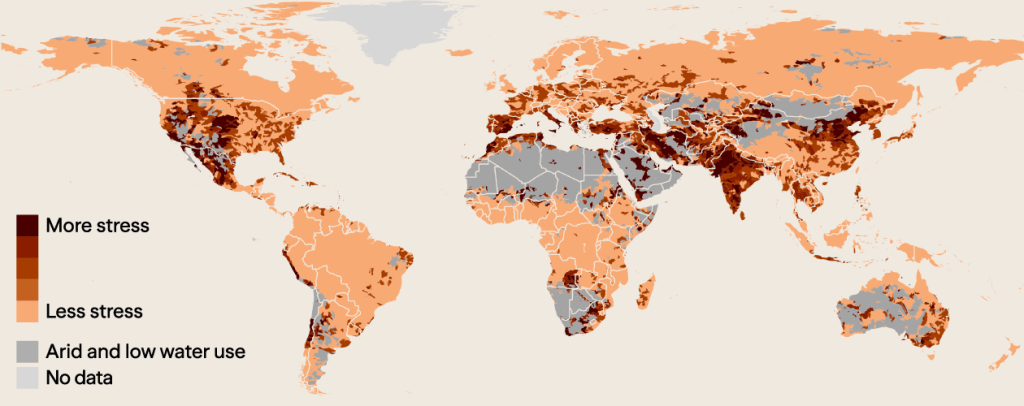
Map shows physical water stress in 2019, excluding anomaly events, based on the long-term trend from 1979–2019.
Measuring a Complex Crisis
Researchers have developed a variety of indicators to assess when and where resources are under stress, with population, availability, and use serving as the foundation for many methodologies. Initially, the focus was on blue water, which includes surface and groundwater. However, critics pointed out that these values often overlooked geographic and seasonal variations, as well as green water, which refers to soil moisture provided by rainfall.
Different guides address various aspects of scarcity. The Falkenmark indicator, for instance, measures renewable water availability per capita, while other approaches compare use with available supplies or incorporate factors such as infrastructure, accessibility, environmental conditions, and economic capacity. Recent methodologies have broadened assessments to include green water, quality, environmental flow requirements, and footprints, acknowledging that the mere physical presence of water does not guarantee its usability or withdrawal without ecological repercussions.
Advancements in spatial modeling have enhanced researchers’ ability to analyze availability and usage at increasingly detailed geographic scales. Nonetheless, significant measurement challenges persist. Supply and demand fluctuate within and between years, meaning that annual averages can obscure periods of acute shortage. The complexity of assessing use is further compounded by globalization and virtual trade, which facilitate the transfer of water embedded in agricultural and other goods between regions. Consequently, no single indicator can fully capture the environmental, temporal, and socioeconomic dimensions of scarcity.
The significance of these measurements lies in their ability to highlight the impact on essential aspects of human life, such as drinking water, sanitation, food availability, health, and daily living. Although these indicators are crucial for identifying the occurrence and nature of water scarcity, they don’t fully capture its consequences. By examining the limited availability of freshwater in conjunction with increasing human demand and the adverse health effects of inadequate sanitation, the critical importance of addressing the shortage becomes obvious.
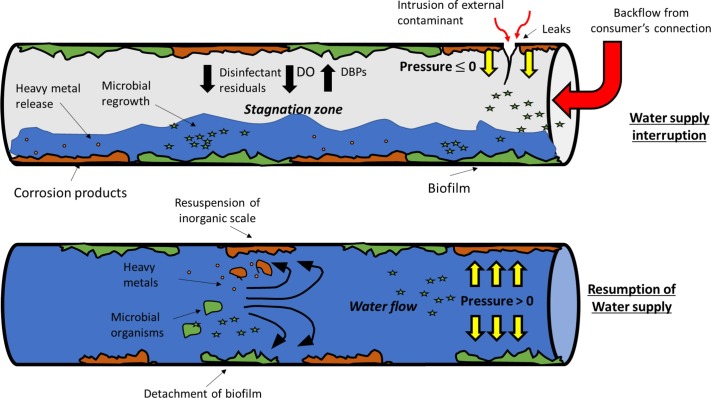
The schematic demonstrating main pathways for water contamination within the IWS.
Causes and Health Risks
The implications of scarcity become increasingly critical when considering the limited portion of the Earth’s water that is accessible for human use. Oceans constitute approximately 97.4% of the planet’s water, which is too saline for direct consumption without treatment, while glaciers and polar ice caps contain a significant portion of the remaining freshwater. The study under review estimates that humans and terrestrial ecosystems rely on less than 1%, approximately 0.6%, of global freshwater resources.
A combination of factors, including population growth, climate change, and inefficient management, exacerbates the pressure on these limited supplies. In communities lacking adequate water and sanitation infrastructure, scarcity can compel residents to depend on contaminated sources for drinking, cooking, bathing, and other daily activities. These conditions are severe in parts of rural Africa and Asia, where access to safe water and sanitation remains limited.
The public health consequences of these conditions can be harsh. Inadequate hygiene can increase the risk of exposure to cholera, typhoid, diarrheal illnesses, and other infectious diseases, while insufficient supplies can lead to dehydration and malnutrition. Prolonged insecurity can also induce psychological stress, indicating that its effects extend beyond infectious diseases to broader physical and mental well-being.
Children are especially vulnerable. The study reports 1.7 billion episodes of diarrhea among juveniles under five, resulting in 3 million deaths, as well as approximately 11 million cases of typhoid fever and 117,000 deaths. The study further indicates that unsafe water, inadequate sanitation, and insufficient hygiene cause about 88% of diarrhea-related deaths. Collectively, these effects underscore why scarcity is not merely an environmental or resource-management issue but a significant global public health challenge.
These health consequences represent only one dimension of the global water crisis. As pressure on freshwater resources increases, the effects can spread beyond individual households and communities to agriculture, food systems, economies, migration, trade, and international relations.
Global Water Stress
Water stress has far-reaching implications beyond the immediate availability of drinking water, affecting agriculture, food security, economic activity, migration, trade, and international relations. Agriculture is specifically significant, accounting for approximately 70% of global freshwater withdrawals, surpassing industrial and household use. Population growth further escalates the demand, while rapid urbanization often outpaces the development of adequate infrastructure. Under these pressures, groundwater has become increasingly vital, supplying about 50% of domestic use and over 40% of irrigation globally, even as aquifers in many regions are being depleted faster than they can naturally recharge.
Climate change introduces additional uncertainty by altering precipitation patterns and increasing temperatures, thereby making supplies less predictable. Higher temperatures can accelerate soil moisture loss, with some regions anticipating longer or more frequent droughts, while others may experience more intense rainfall and flooding. These changes have significant implications for agriculture and food security, as unreliable sources complicate food production and heighten vulnerability to hunger and malnutrition.
Water stress varies significantly by region. The Middle East and North Africa are vulnerable because of arid conditions, limited waterways, rapid urban growth, and high demand; 15 of the world’s 20 most water-scarce countries are in this area. South Asia, sub-Saharan Africa, and the southwestern United States also face substantial pressure. In states such as Arizona and Nevada, infrastructure such as dams, aqueducts, and reservoirs helps communities manage naturally limited supplies, but prolonged drought and rising demand continue to strain systems.
The repercussions of scarcity extend well beyond the confines of the affected watershed. Diminished availability can lead to reduced agricultural output, disrupt supply chains, hinder transportation along rivers and canals, exacerbate economic inequality, and drive migration. Shared water resources can also become a source of political tension, particularly when nations disagree on allocation or management strategies.
Conversely, water can serve as a catalyst for cooperation. Since 1948, countries have signed nearly 300 international water agreements, demonstrating that shared reliance on freshwater resources fosters collaboration even amid broader political disagreements.
The growing social, economic, and geopolitical implications of water stress underscore that scarcity is no longer merely a local resource issue. In certain regions, however, decades of depletion and environmental degradation have pushed water systems beyond temporary stress or crisis, necessitating urgent and comprehensive management strategies.
The Age of Global Water Bankruptcy
A 2026 report from the United Nations University Institute for Water, Environment and Health highlights a critical escalation in the condition of global systems, now described as water bankruptcy. This term signifies chronic overexploitation of surface and groundwater resources, surpassing renewable inflows and safe depletion thresholds, leading to irreversible or prohibitively costly losses of water-related natural capital. Unlike stress, which remains potentially reversible, or crisis, which may involve an acute yet recoverable disruption, bankruptcy indicates a persistent depletion of both renewable supplies and reserves stored in aquifers, glaciers, wetlands, and other natural classifications.
The deterioration of these systems is apparent across various components of the hydrological cycle. Approximately 70% of the world’s major aquifers are experiencing long-term declines, and more than half of large lakes have lost water since the early 1990s. Over the past five decades, around 410 million hectares of natural wetlands have vanished, and some regions have seen over a 30% reduction in glacier mass since 1970. Excessive groundwater extraction has also led to land subsidence, affecting nearly 2 billion people living on sinking land.
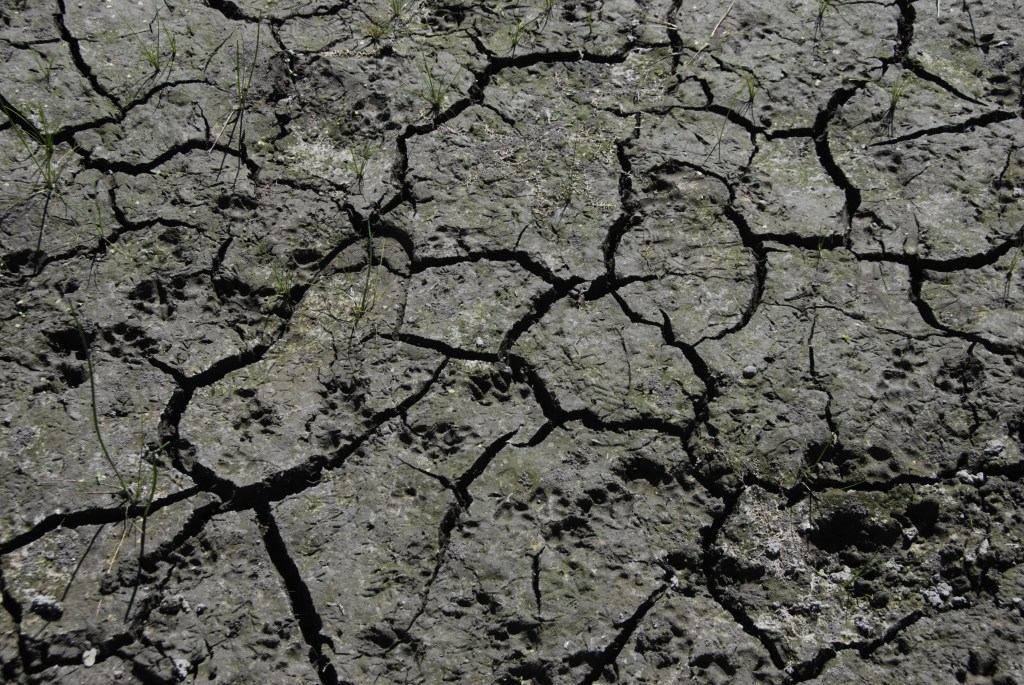
Created by silakan on Adobe Stock.
These changes pose a significant threat to food production. Around 3 billion people inhabit zones experiencing declining or unstable total water storage, which contribute to over 50% of global food output. Likewise, about 170 million hectares of irrigated cropland are subject to climbing stress. The situation is further exacerbated by declining quality, as untreated wastewater, agricultural runoff, industrial pollution, and salinization diminish the availability of water suitable for human consumption, agriculture, and ecosystems. The report notes that salinization alone has compromised 100 million hectares of cropland.
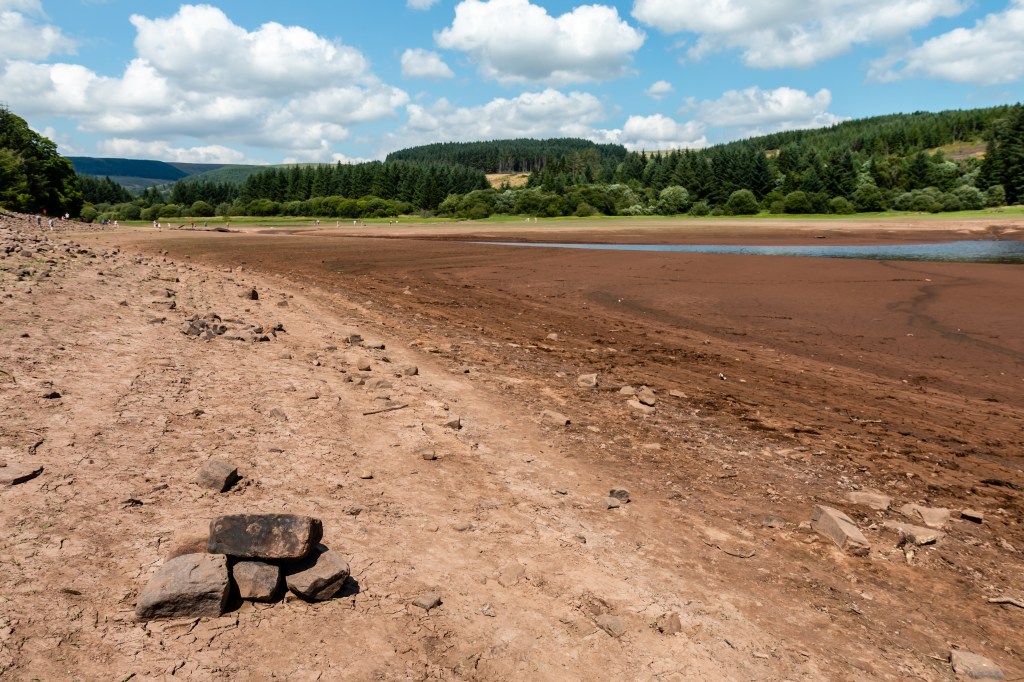
Water bankruptcy does not mean a region is permanently dry. Heavy rain and flooding can occur even when long-term withdrawals continue to exceed replenishment. Chronic groundwater decline in parts of South Asia and pressure on the Colorado River and its reservoirs in the American Southwest illustrate this pattern. Because agriculture, trade, migration, climate, and geopolitics connect systems, severe depletion can cause consequences far beyond the territory where it starts.
Created by whitcomberd on Adobe Stock.
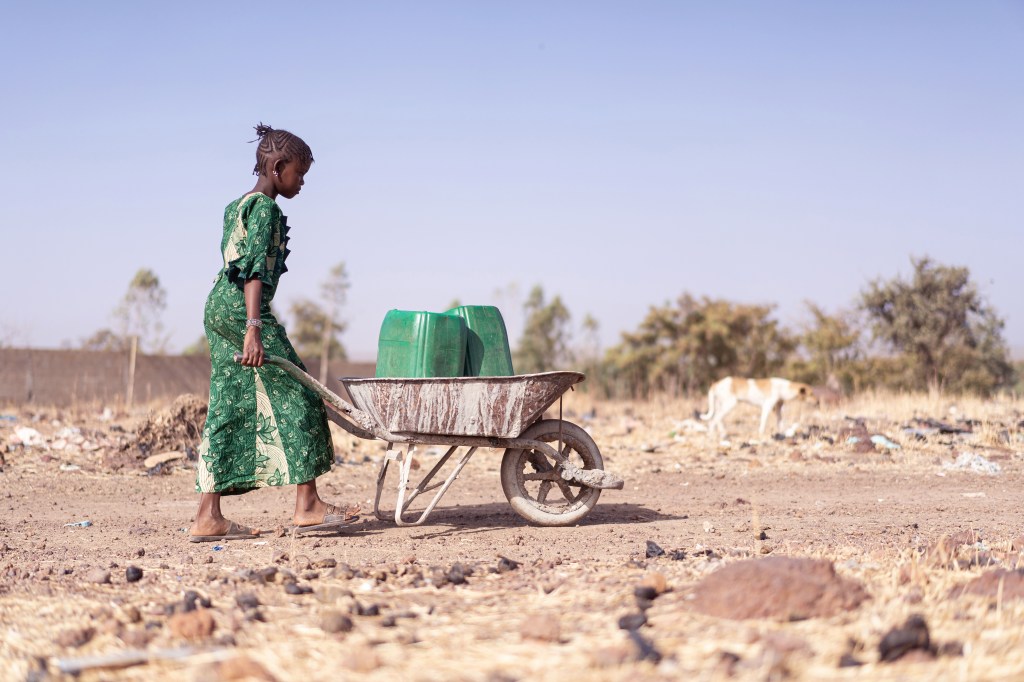
Rather than assuming water systems can return to historical conditions, governments must prevent further irreversible losses, reduce pollution, reconsider allocations and expectations, transform water-intensive sectors, and help communities adapt to changing hydrological limits. The report frames water bankruptcy as a justice issue because its burdens can fall disproportionately on smallholder farmers, Indigenous Peoples, low-income urban residents, women, and young people.
As traditional sources become depleted, degraded, or unreliable, communities must maintain essential supplies under increasingly challenging conditions. Yet measures used to offset shortages can create another hardship: protecting the quality and safety of the water delivered to consumers.
Created by Riccardo Niels Mayer on Adobe Stock.
Shortage and Safety
As conventional freshwater sources become less reliable, utilities and households increasingly turn to alternatives, blending supplies, providing intermittent service, arranging bulk delivery, and storing water in building or rooftop tanks. Although these measures can preserve access during shortages, they can also create additional risks to quality.
Those risks arise because changes in sources, distribution practices, and storage conditions can affect both the microbiological and chemical quality of drinking water. Intermittent service is especially concerning because delivery systems operate differently when utilities cannot maintain continuous pressure. Household storage can compound the problem when water remains in tanks under conditions that allow contamination or deterioration.
For this reason, we must evaluate reuse, blending, delivery, and other shortage responses not only by how much supply they add but also by how they change the way people provide and store water. Effective scarcity planning must address both quantity and safety, since additional water offers little benefit if its delivery introduces unacceptable microbial or chemical risks.
Managing those risks requires consistent monitoring and mitigation. By identifying hazards associated with alternative sources, distribution practices, and household storage, utilities and communities can reduce contamination in both the short and long term. Protecting future supplies therefore requires attention to the entire system from the source and distribution network to the consumer’s point of use.
Even with these safeguards, a community’s ability to respond ultimately shapes the risks associated with unreliable or unsafe water. Differences in infrastructure, household resources, and access to safe supplies can therefore turn water insecurity into a broader public-health and equity issue, including within the United States.
Health and Equity
In the United States, inadequate access to safe water and sanitation remains a major public-health concern. An estimated 2.2 million Americans live in homes without running water or basic plumbing, while tens of millions more face inadequate sanitation linked to aging infrastructure and failing septic systems. Whether the problem is insufficient supply or contamination, water insecurity can threaten health and place added burdens on affected households.
However, people do not share these burdens equally. The CDC Foundation cites research showing that inadequate water and sanitation systems disproportionately affect Latino, Black, and Indigenous communities, as well as immigrants and people in low-income and rural areas. These disparities reflect not only infrastructure conditions but also broader geographic and socioeconomic inequalities.
Beyond the health risks, water insecurity can deepen household financial strain. Families without reliable service may lose work time obtaining or transporting water and may depend on bottled water, which the CDC Foundation estimates can cost about $1,350 per year. Nationwide, researchers estimate that water insecurity costs the U.S. economy about $8.58 billion annually through lost labor and productivity, reduced household earnings, and higher healthcare costs.
How these pressures unfold depends on local conditions. In the Navajo Nation, over 15% of the population lacks piped water at home. In Jackson, Mississippi, the 2022 failure of a water treatment facility left approximately 150,000 residents without drinkable water for weeks. Together, these cases demonstrate how distinct infrastructure, environmental, and regional factors create water insecurity and why each community requires tailored responses.
Although these community examples reveal the human consequences of inadequate water access, they do not capture the full extent of the problem. National data on plumbing access, drinking-water quality, and wastewater compliance provide a broader view of how widely water hardship affects communities across the United States.
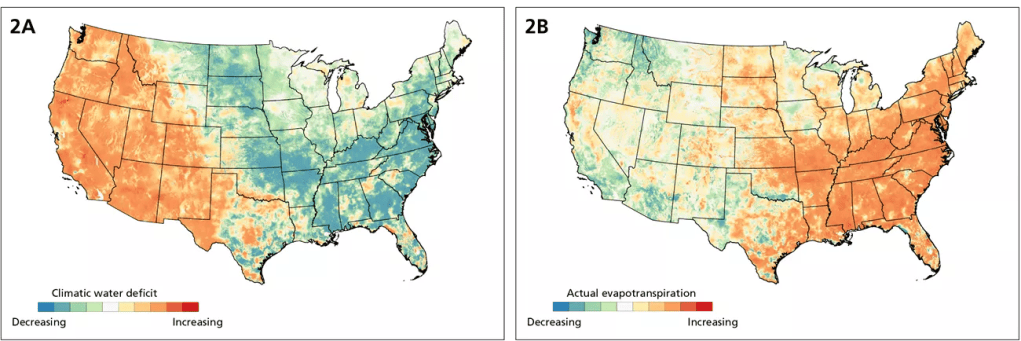
Figure 2A. Change in annual total climatic water deficit (WD) estimated for 1980–2019.
Figure 2B. Change in annual total actual evapotranspiration (AET) estimated for 1980–2019.
https://www.nps.gov/articles/000/ncpn_water_availability.htm
Insecurity and Inequality in the United States
Although national access statistics suggest that inadequate water and sanitation are relatively uncommon in the United States, disaggregated analyzes reveal substantial disparities. To assess the extent of water insecurity more comprehensively, J. Tom Mueller and Stephen Gasteyer examined multiple dimensions of water hardship, including incomplete household plumbing, quality, and wastewater compliance.
Using data from the American Community Survey and the Environmental Protection Agency, the researchers identified 489,836 households without complete plumbing and 1165 community water systems classified as serious violators under the Safe Drinking Water Act. Their corrected analysis also found 9,457 Clean Water Act permittees significantly noncompliant across the 39 states and territories with reliable data.
These findings show that social and geographic factors shape the uneven distribution of water hardship. Higher levels were associated with rurality, poverty, education, and age, leading the researchers to characterize the issue as a nationwide environmental injustice. Aggregate statistics may therefore obscure communities in which access to complete plumbing, safe drinking water, and compliant wastewater systems remains persistently inadequate.
The condition and performance of water infrastructure reinforce these disparities. Access depends not simply on whether systems exist, but on whether they can provide reliable and adequate service. Correcting existing deficiencies therefore requires both targeted attention to underserved communities and sustained investment in the systems on which they depend.
That investment challenge is substantial. U.S. drinking-water systems face sustained financial pressure from aging infrastructure, regulatory obligations, climate-resilience needs, cybersecurity risks, and increasingly complex treatment requirements. Estimates indicate that drinking-water infrastructure will require between $2.1 trillion and $2.4 trillion in investment from 2026 through 2050, while current spending remains approximately $56.6 billion below annual needs. Because federal funding accounts for only 3.9% of water-infrastructure investment, most financing responsibility rests with state and local governments and, ultimately, the communities and ratepayers served by these systems.
Moreover, these financial demands extend beyond replacing aging pipes and facilities. Utilities must comply with requirements related to PFAS treatment and lead-service-line replacement, adapt infrastructure to climate-related risks, strengthen cybersecurity, and could develop alternative supplies through technologies such as desalination and reverse osmosis. Utilities may spend more than $100 billion to replace lead service lines, while meeting PFAS requirements will probably require substantial additional investment in treatment capacity.
Taken together, the evidence shows that water insecurity, infrastructure adequacy, and affordability are interdependent. Investments in reliable and compliant services are necessary to reduce existing disparities, but the mechanisms used to finance those investments directly affect household costs. As infrastructure expenditures rise, policymakers and utilities must integrate affordability into efforts to sustain equitable access to the nation’s drinking-water systems.
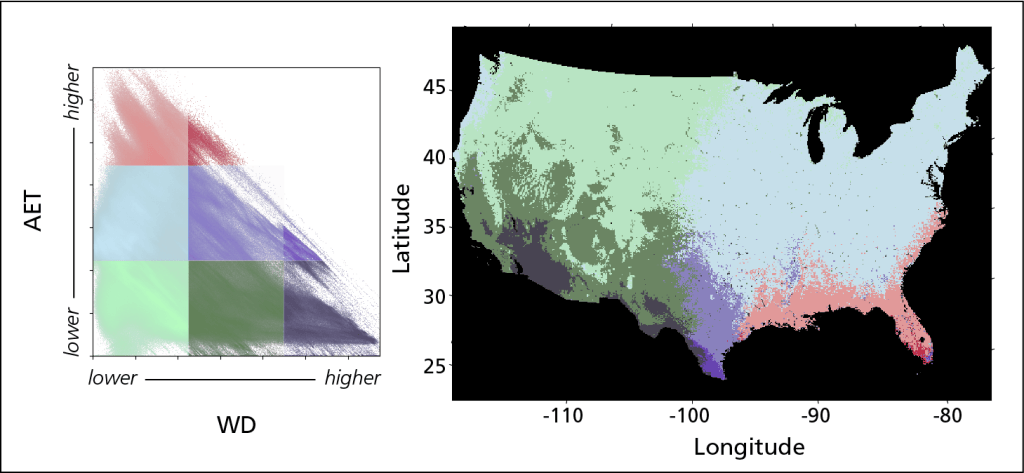
Figure 1. Spatial patterns in climatic water deficit (WD) and actual evapotranspiration (AET). Left: Scatterplot of average annual WD and AET for all locations in the continental US, 1981–2019. Colors correlate to zones depicted on the map at right. Right: Geographic locations of colored areas in the scatter plot.
https://www.nps.gov/articles/000/ncpn_water_availability.htm
America’s Water Affordability Crisis
The EPA’s 2024 Water Affordability Needs Assessment estimates that 12.1 to 19.2 million U.S. households face unaffordable water costs, representing an annual need of approximately $5.1 billion to $8.8 billion. Because affordability measures capture different dimensions of household financial capacity, the EPA evaluates the issue through multiple approaches rather than applying a single national definition.
The assessment measures household burden using thresholds of 3% and 4.5% of income, assumes basic use of 50 gallons per person per day, and adjusts American Community Survey income data with the Consumer Price Index. The EPA applies these thresholds to combined water and wastewater costs rather than establishing separate standards for each service.
The analysis also considers whether utilities serve disproportionate numbers of financially vulnerable households. Under income criteria associated with the Infrastructure Investment and Jobs Act, the EPA classifies a service area as disproportionate when over 40% of its households match federal poverty guidelines. However, limited rate data, particularly from rural, small, and Tribal systems, reduce the geographic representativeness of the assessment and may understate need in smaller communities.
These findings indicate that affordability policy must address both household income and the underlying cost of service. Relevant measures include customer-assistance programs, improved rate design, lower infrastructure and operating costs, and stronger technical, financial, and administrative support for utilities. Where detailed household data are unavailable, utilities can use community-level indicators, such as lowest-quintile income, while EPA Water Technical Assistance can support financial planning and rate analysis.
Current federal assistance remains limited relative to the estimated scale of need. Section 50109 of the Infrastructure Investment and Jobs Act authorizes fewer than 40 grants if funded, and any broader national assistance program would require congressional appropriations. The EPA therefore situates affordability within a larger system of household finances, utility costs, rate structures, infrastructure investment, and institutional capacity.
Because rising utility costs reflect both financial and resource pressures, long-term affordability also depends on how efficiently communities manage water. Conservation, desalination, and recycling can reduce demand or supplement conventional supplies, but their value depends on local conditions, costs, and infrastructure.
Conservation provides the most immediate and economical response because it improves the productivity of existing supplies. Household actions include repairing leaks, limiting outdoor watering, and installing efficient fixtures, while larger gains may come from irrigation and agriculture, which account for the largest share of freshwater use.
Where conservation cannot meet demand, desalination can expand supply by removing salt from seawater or brackish water. Desalinated water serves over 300 million people worldwide, and the Claude “Bud” Lewis Carlsbad Desalination Plant supplies about 10% of the drinking water used by the San Diego region’s 3.1 million residents. Its high energy requirements and costs, approximately twice those of other sources, nevertheless limit its suitability as a universal solution.
Water recycling offers a complementary approach by treating previously used water for additional purposes. Arizona, California, and Florida already use reclaimed water for irrigation and industry, while households can use gray water for similar nonpotable applications. Advances in treatment have also expanded opportunities for potable reuse.
Orange County, California, illustrates the technical demands of potable reuse. Its treatment process combines filtration, reverse osmosis to remove contaminants including PFAS, and advanced treatment with hydrogen peroxide and ultraviolet light. Such systems can strengthen long-term supply portfolios, but they require substantial infrastructure and specialized operation.
Accordingly, alternative supplies do not eliminate the need for institutional capacity. Communities must invest in treatment facilities, engineers, operators, monitoring, and maintenance to implement these technologies safely and reliably. The effectiveness and affordability of conservation, desalination, and reuse ultimately depend on how well communities integrate them into broader regional water-management strategies.
Regional strategies must therefore align financial capacity, infrastructure, climate, storage, and available water sources. Central Arizona provides a useful case study of how a drought-prone region combines diversified supplies, storage systems, infrastructure investment, and institutional partnerships to strengthen long-term reliability.
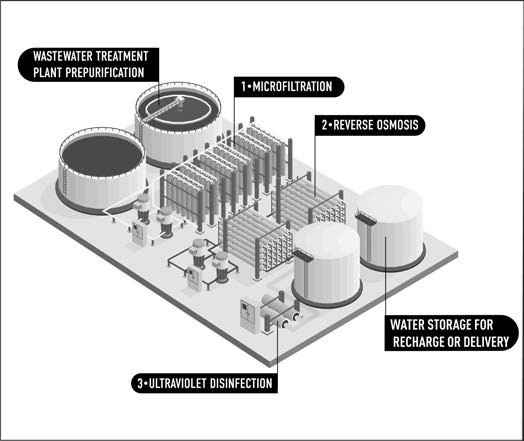
Water treatment technology has vastly improved over the last few decades. This is how a process involving reverse osmosis works. (Courtesy of Peter Annin).
Drought Adaptation and Water Sustainability in Central Arizona
Central Arizona illustrates how long-term planning and diversified water management can enhance water security in an arid environment. With drought conditions persisting since 1996, regional providers have increasingly relied on strategic storage, monitoring, and allocation practices to maintain reliable supplies. Rather than depending on a single source, the Salt River Project (SRP) integrates surface water, groundwater, reservoir storage, and aquifer recharge into a coordinated system designed to withstand periods of both scarcity and abundance.
A central component of this strategy is reservoir storage. SRP collects and stores surface water from rainfall and snowmelt in the Salt and Verde River watersheds through a network of seven reservoirs. Together, these facilities can store approximately 750 billion gallons of water, enabling surplus supplies from wetter periods to be conserved and distributed during droughts. This stored water supports municipal, residential, and agricultural users throughout the Greater Phoenix region.
To further strengthen supply reliability, SRP supplements reservoir storage through groundwater recharge. Projects such as the Granite Reef and New River-Agua Fria underground storage facilities direct water into recharge basins, allowing it to be stored within aquifers for future recovery. SRP adjusts groundwater pumping in response to reservoir conditions, creating a flexible system in which surface water and groundwater function as complementary resources. Through a network of 270 wells, groundwater can provide nearly half of the annual water deliveries.
Besides storage and recharge efforts, infrastructure improvements have increased the efficiency of existing water resources. Modifications to operations at Roosevelt Dam extended the allowable retention period for water stored in flood-control space from 20 to 120 days, allowing an additional 100,000 acre-feet of water to be conserved. Achieving this expansion required collaboration among SRP, federal agencies, municipalities, tribal governments, and agricultural districts, demonstrating the importance of cross-sector cooperation in water management.
This collaborative approach extends beyond individual projects. SRP works alongside Valley municipalities, the Central Arizona Project, and the Arizona Department of Water Resources to support regional planning, water monitoring, and the development of extra supplies. Efforts to protect water rights have also strengthened long-term availability. Notably, agreements with the Gila River Indian Community have made millions of acre-feet of additional water supplies accessible to Central Arizona users.
Collectively, these measures demonstrate how integrated water management can improve resilience in drought-prone regions. Although reservoir storage, groundwater recharge, infrastructure investments, and regional partnerships cannot eliminate the challenges posed by prolonged drought and growing demand, they can significantly enhance long-term water reliability. As water scarcity intensifies across the American Southwest, Central Arizona provides a valuable model for balancing environmental constraints with the water needs of a growing population.
Although Central Arizona’s water management system demonstrates the benefits of long-term planning and regional cooperation, its success does not eliminate the need for continued innovation and adaptation. Many existing strategies focus on maximizing and conserving current supplies rather than reducing long-term demand. Continued population growth, climate change, and declining river flows may add pressure on resources, highlighting the need for expanded conservation programs, greater reuse, and further investment in innovative technologies. While current measures have strengthened regional resilience, maintaining water security will require ongoing adaptation as environmental and demographic conditions continue to develop.

Created by Manik Mia on Adobe Stock Images.
Central Arizona demonstrates how long-term planning, diversified water supplies, infrastructure investment, and regional cooperation can strengthen water reliability in a drought-prone environment. However, the challenges explored throughout this article extend far beyond any single region or solution. Water scarcity increasingly exposes the connections among aging infrastructure, environmental degradation, climate pressures, drinking-water safety, public health, and the rising costs of maintaining reliable service.
Addressing these challenges will require more than developing alternative water sources. Effective water security depends on protecting existing resources, improving infrastructure and efficiency, expanding responsible water reuse, strengthening monitoring and management practices, and ensuring that the costs of these efforts do not place safe water beyond the reach of vulnerable households. Equally important, policymakers and water managers must recognize that water insecurity affects communities unevenly, often placing the greatest burdens on those with the fewest resources.
Ultimately, communities must recognize water not merely as a commodity to be delivered but as a foundation of public health, economic stability, environmental sustainability, and community resilience. As populations grow and climate conditions become increasingly uncertain, the question is no longer whether societies have enough water today, but whether they can manage it sustainably for tomorrow. The future of water management rests on a deceptively simple principle: humanity’s most sophisticated technologies, economies, and institutions remain dependent on the same resource that has sustained life from the beginning. Ensuring that resources remain reliable and accessible may end up becoming one of the defining challenges of the twenty-first century.
Sources
American Water Works Association. Beyond the Replacement Era. https://www.awwa.org/beyond-the-replacement-era/
United States Environmental Protection Agency. Water Affordability Needs Assessment. https://www.epa.gov/waterfinancecenter/water-affordability-needs-assessmentCBS News. Americans are paying 62% more for water than a decade ago. Here’s where costs have risen the most. https://www.cbsnews.com/news/us-water-bills-rising-study-finds/
National Library of Medicine. Water scarcity assessments in the past, present, and future. https://pmc.ncbi.nlm.nih.gov/articles/PMC6204262/
Science Direct. Global water shortage and potable water safety; today’s concern and tomorrow’s crisis. https://www.sciencedirect.com/science/article/pii/S0160412021005614
SRP. Managing the Valley’s water during droughts. https://www.srpnet.com/grid-water-management/water-management/water-resources?utm_campaign=3261474&utm_medium=ps&utm_source=goog&utm_content=traffic_phoenix_x_shortage_responsive_x&utm_id=3656829674&gad_source=1&gad_campaignid=23676413888&gbraid=0AAAAACWSiCdiEO-haGkymK42k37b5Cr5u&gclid=CjwKCAjw25fWBhAVEiwAMopNjiVCwQiPM-ag-dmqEqH2T1iwosGjRkUdPsqq3HCjMHMZ6paCZXY5qhoCxn8QAvD_BwE
American Society of Civil Engineers. America is in a water crisis, but help is on the way. https://www.asce.org/publications-and-news/civil-engineering-source/article/2024/09/17/america-is-in-a-water-crisis-but-help-is-on-the-way
CDC Foundation. Addressing a Growing Water Crisis in the U.S. https://www.cdcfoundation.org/blog/addressing-growing-water-crisis-us
Research Gate. Reasons behind the Water Crisis and its Potential Health Outcomes. https://www.researchgate.net/publication/378077439_Reasons_behind_the_Water_Crisis_and_its_Potential_Health_Outcomes
UN INWEH. World Enters “Era of Global Water Bankruptcy”: UN Scientists Formally Define New Post-Crisis Reality for Billions. https://unu.edu/inweh/news/world-enters-era-of-global-water-bankruptcy
Council on Foreign Relations. The Global Water Crisis: Stress, Scarcity, and Conflict. https://www.cfr.org/backgrounders/water-stress-global-problem-thats-getting-worse
United Nations. Water Scarcity. https://www.unwater.org/water-facts/water-scarcity
Nature Communications. The widespread and unjust drinking water and clean water crisis in the United States. https://www.nature.com/articles/s41467-021-23898-z


Leave a Reply